
Weber Smokey Mountain vs. Santa Maria Grill: Which Rig Is Right for Your Backyard?
You might think that a dedicated vertical smoker is the only way to achieve competition-grade barbecue, but the most versatile tool for your backyard might actually be a live-fire pit. We know the feeling of starting out with a reliable charcoal rig, only to eventually deal with grates that rust or heat controls that feel more like suggestions. When comparing the weber smokey mountain vs santa maria grill, you're really deciding between two different philosophies of heat and durability. With major brands now entering the live-fire space for the first time in 2026, it's clear that the demand for authentic wood-fire control is higher than ever.
Discover the fundamental differences in flavor, control, and craftsmanship to decide between a dedicated vertical smoker and a professional live-fire grill. We'll clarify the flavor gap between trapped smoke and open-air wood fire, while exploring which rig offers the permanence your family deserves. We're going to show you why a heavy-duty upgrade can transform your weekend cookouts into a professional culinary experience. Whether you want to manage a vent or command a fire, this guide will help you build a backyard legacy that stands the test of time.
Key Takeaways
- Learn why the open-pit design of a Santa Maria grill offers superior thermal control and flavor compared to traditional vertical water smokers.
- Compare the weber smokey mountain vs santa maria grill to see if you prefer a hands-off smoking session or the active mastery of a live-fire pit.
- Understand the durability gap between thin-gauge mass-market steel and the heavy-duty 3/16" or 1/4" steel used in professional handcrafted builds.
- Discover how the adjustable height grate allows for immediate heat precision, giving you the power to command the fire in real-time.
- Identify which rig best serves your long-term backyard goals, from quick weeknight grilling to slow-smoked weekend feasts.
Understanding the Core Difference: Vertical Smoking vs. Live-Fire Control
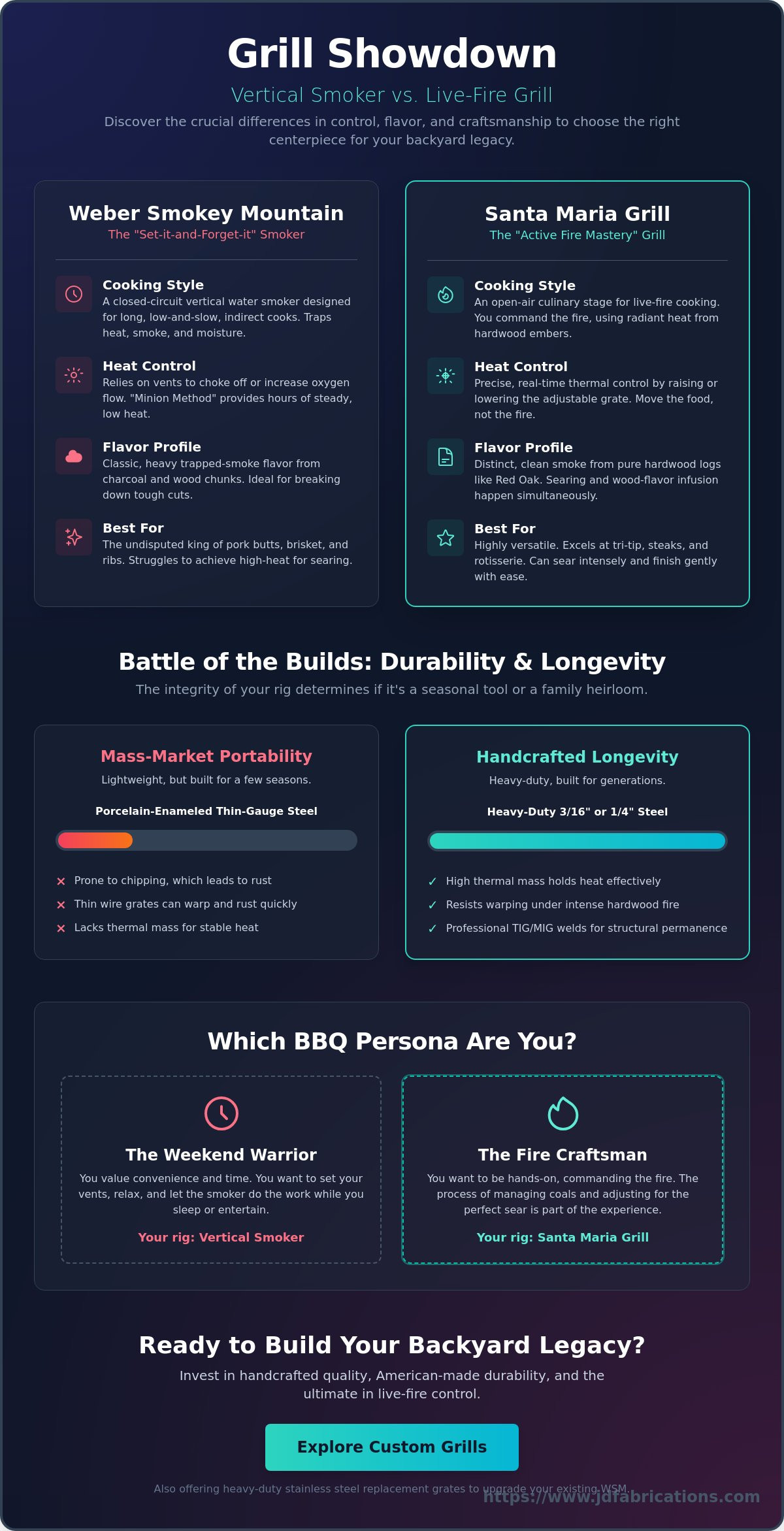
Choosing a rig isn't just about picking a metal box. It's about deciding how you want to spend your Saturday. When you look at the weber smokey mountain vs santa maria grill, you're choosing between a closed-circuit smoker and an open-air culinary stage. The WSM is a vertical water smoker built for long, indirect cooks where you trap heat and moisture to break down tough cuts. On the other hand, Santa Maria grills use an open-pit design with an adjustable height grate. This design allows for precise thermal control by physically moving the meat closer to or further from the coals, rather than just choking off oxygen through a vent.
The Smoke Profile: Set-it-and-Forget-it vs. Active Management
The WSM relies on the "Minion Method" where a few hot coals slowly ignite a large pile of unlit fuel. It's a reliable approach that works well for overnight brisket sessions. Contrast this with the active fire management required for a Santa Maria Style Single Crank Grill. Here, you aren't just watching a thermometer; you're building a bed of coals from pure hardwood logs. Live-fire cooking is the art of using radiant heat from wood embers to sear and flavor your food simultaneously. This method is deeply rooted in the traditions of Santa Maria-style barbecue, where Red Oak provides a distinct, clean smoke profile that charcoal chunks simply cannot replicate.
Versatility: Can One Rig Do It All?
The WSM is the undisputed king of pork butts and ribs. However, it often struggles when you need a high-heat sear for a thick ribeye. Its vertical design makes it difficult to reach the intense temperatures needed for a perfect crust. A Santa Maria grill excels at tri-tip, steaks, and even rotisserie with the right attachments. You can drop the grate right onto the flames for a quick sear, then crank it up to finish the cook gently. This makes it a far more versatile centerpiece for a craftsman who wants to do more than just smoke meat.
Battle of the Builds: Mass-Market Portability vs. Handcrafted Longevity
The physical integrity of your rig determines whether it's a tool for a few seasons or an heirloom for your grandkids. When debating the weber smokey mountain vs santa maria grill, the most striking difference is the weight and grade of the metal. A WSM is constructed from porcelain-enameled thin-gauge steel. It's lightweight and easy to move; however, that enamel can chip over time. Once the protective coating fails, rust moves in quickly, especially if you live in a coastal environment where salt air is a constant factor.
Compare that to the fabrication standards we maintain. We build our rigs with heavy-duty 3/16" or 1/4" steel and offer high-grade stainless steel options. This isn't just about making the grill heavy. It's about thermal mass and structural permanence. The history of barbecue shows us that the best results come from stable cooking environments. Thicker steel holds heat more effectively and won't warp under the intense pressure of a hardwood fire. Standard wire grates often fail first, but laser-cut stainless steel prevails because it provides a flat, sturdy surface that stays easy to clean for years.
Upgrading the WSM: The Precision Replacement Grate
If you already own a WSM, you don't have to settle for flimsy, factory-standard parts. You can significantly improve your setup by using Weber Smokey Mountain replacement grates. These laser-cut stainless steel upgrades prevent warping and offer much better airflow than thin wire. It's a simple way to bring professional fabrication quality to a standard Weber rig. If you're tired of scrubbing rusted grates, consider a heavy-duty stainless steel grate to extend the life of your current smoker.
The Santa Maria Advantage: Built for Generations
A custom Santa Maria grill is a different beast entirely. We use professional TIG and MIG welding to ensure every joint is as strong as the steel plates themselves. There are no rivets to pop and no thin sheets to buckle under high heat. This is a rig built for generations of use, designed to be the centerpiece of your backyard for decades. When you invest in handcrafted quality, you're buying the peace of mind that comes with superior engineering and American-made durability.
Choosing Your Rig: Which Grill Matches Your BBQ Persona?
When you weigh the weber smokey mountain vs santa maria grill, the decision often comes down to how much you want to interact with the fire. If you identify as a "Weekend Warrior," the WSM offers the luxury of time. You can fire it up, set your vents, and catch a few more hours of sleep while your pork butt smokes to perfection. It's a tactical choice for the person who values efficiency and a compact, vertical footprint in their backyard setup.
The "Culinary Craftsman" wants a different experience. A Santa Maria rig is for those who find genuine joy in the process of building a clean fire and managing live embers. It's a statement piece with significant presence, especially a Dual Crank Santa Maria Grill. While the initial investment for a handcrafted rig is higher, the cost-to-value ratio in the weber smokey mountain vs santa maria grill debate favors the long game. You're paying for decades of performance and a rig that won't need replacing in five years.
When to Stick with the WSM (and Upgrade It)
If you already own a smoker, don't feel like you have to start from scratch to get better results. You can perfect your current rig instead. Swapping out factory parts for a stainless steel replacement grate solves the most common complaint we hear from Weber users: rusting and warping. This simple upgrade brings the same precision metal forming and bending quality we use in our custom shops to your existing setup, ensuring your grates last as long as the cooker itself.
When to Step Up to a Santa Maria or Argentine Grill
There comes a point where you want to move from hobbyist to pro-level entertaining. The visual appeal of a wood-fired Argentine Style Grill with its dedicated brasero creates an atmosphere that a closed smoker simply can't match. It turns your dinner into a show. If you're ready to elevate your cook and invest in a rig that will stay in your family for years, we're here to help you make that transition. Shop our Weber Smokey Mountain upgrades today!
Command the Fire Your Way
Choosing between the weber smokey mountain vs santa maria grill ultimately defines your relationship with the flame. Whether you prefer the steady, indirect heat of a vertical smoker or the hands-on mastery of a live-fire pit, the quality of your equipment makes the difference between a frustrating cook and a perfect meal. We've explored how a move toward heavy-duty steel and precision engineering can turn your backyard into a professional kitchen. You don't have to settle for parts that rust or warp when you can invest in gear built for generations.
Our products are handcrafted in Santa Maria, CA, and are trusted by professional pitmasters across the country. We use laser-cut technology to ensure a perfect fit and maximum durability for every piece we build. If you're ready to take your current setup to the next level, it's time to choose components that reflect your passion for the craft. Upgrade Your WSM with Precision Stainless Steel Grates and experience the difference that expert fabrication makes. Keep the fire hot and the tradition alive in your own backyard!
Frequently Asked Questions
Can I use wood logs in a Weber Smokey Mountain?
You shouldn't use full wood logs in a Weber Smokey Mountain because the firebox is too small for that type of fuel. It's built to run on charcoal briquettes or lump charcoal with wood chunks added for flavor. If you try to burn full logs, you'll likely struggle with massive temperature spikes and thick, bitter smoke. Stick to high-quality chunks to get that clean blue smoke without overwhelming your vertical rig.
What is the best wood for a Santa Maria style grill?
Red Oak is the gold standard for any Santa Maria style grill. It provides a balanced, medium-smoke flavor that perfectly complements beef, especially tri-tip. Since this wood is native to the Central Coast of California, it's the heart of the tradition. You want a wood that burns hot and produces a steady bed of coals. While you can use white oak or hickory, nothing matches the authentic profile of seasoned Red Oak.
How do I prevent my WSM grates from rusting?
You can prevent rust on standard grates by cleaning them after every cook and applying a thin layer of high-smoke-point oil while they're still warm. However, the porcelain coating on factory grates eventually chips, exposing the raw steel to moisture. When comparing the weber smokey mountain vs santa maria grill, the durability of the cooking surface is a major factor. The most permanent solution is upgrading to a heavy-duty, laser-cut stainless steel grate that won't corrode.
Is a Santa Maria grill harder to use than a smoker?
A Santa Maria grill isn't necessarily harder to use, but it requires more active management than a set-it-and-forget-it smoker. You're physically moving the grate to find the perfect temperature instead of just adjusting air vents. It's a more intuitive way to cook once you understand how your fire behaves. For many craftsmen, the ability to see and feel the heat makes it easier to achieve a perfect sear compared to a closed-chamber smoker.
Disclaimer
The information in this article is provided for general informational purposes only. JD Fabrications Inc. is a custom fabrication company, not a licensed contractor or installer. Always consult qualified professionals and local codes before installation or construction involving live-fire cooking equipment or outdoor kitchens.