
Cost to Build an Outdoor Kitchen in 2026: A Complete Budgeting Guide
Why does a backyard cooking station often cost as much as a brand-new sedan? While the shiny stainless steel grill gets all the attention, it's the invisible infrastructure and material longevity that truly drive the cost to build an outdoor kitchen. Most homeowners expect to pay for the appliances, but they're often surprised by the $5,000 to $50,000 price range that defines custom projects in 2026.
You've likely encountered conflicting advice on which materials to trust or felt a bit of sticker shock when looking at utility hookup fees. It's frustrating to plan a dream space when you're worried about overspending on features you'll never use. This guide will demystify those expenses by breaking down the current price landscape, from $200 permits to $10,000 premium grills. We'll explore which materials actually last a decade, how to budget for labor that accounts for 30% to 50% of your total spend, and when you can safely choose between a DIY approach or hiring a professional.
Key Takeaways
- Establish a realistic budget by comparing price tiers, ranging from basic prefabricated islands to fully custom masonry builds.
- Uncover the hidden infrastructure expenses that influence the total cost to build an outdoor kitchen, such as gas line trenching and dedicated electrical circuits.
- Choose materials like granite or Dekton based on their "cost-per-year" to ensure your cooking space remains functional and beautiful for over ten years.
- Decide between hiring a general contractor or managing individual trades by understanding the specific labor premiums for plumbers, masons, and electricians.
- Learn how strategic material choices and custom layouts can drive a higher return on investment and increase your home's total appraisal value.
Outdoor Kitchen Price Ranges: Setting Realistic Expectations for 2026
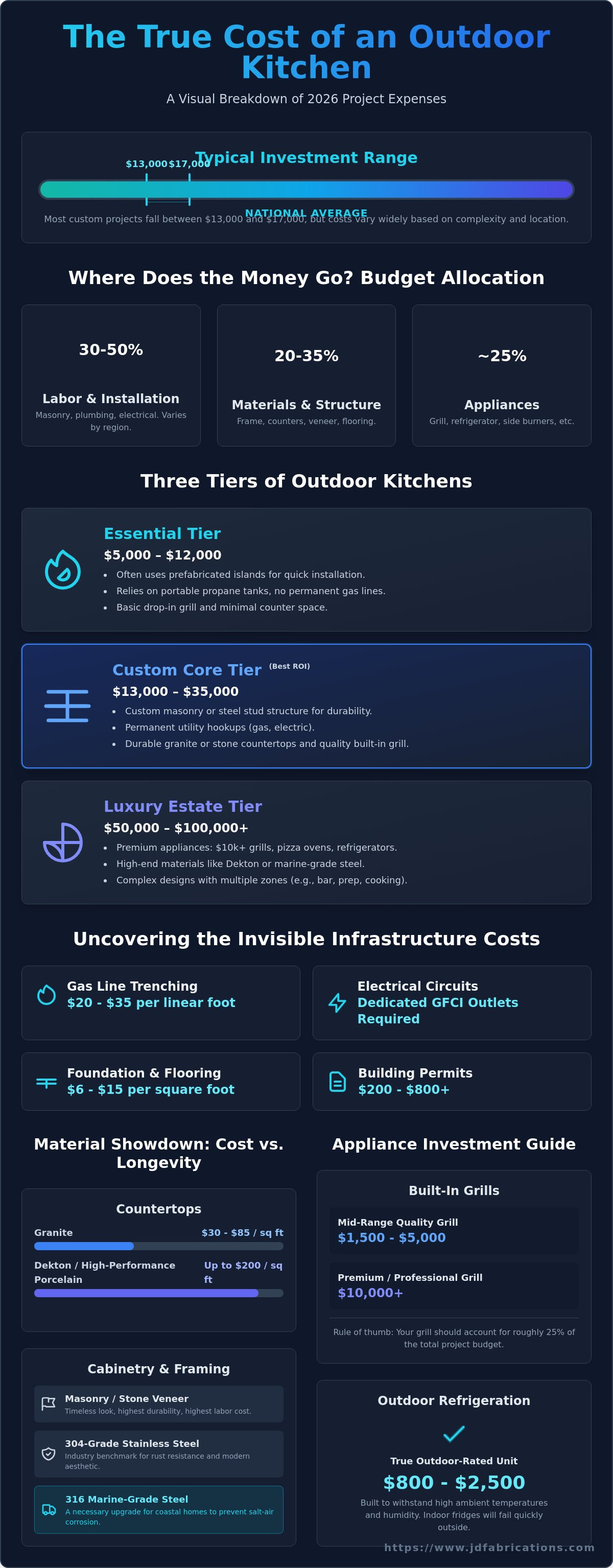
Understanding the cost to build an outdoor kitchen starts with recognizing that most projects fall into a broad spectrum of $5,000 to $50,000. While the national average for a custom setup sits between $13,000 and $17,000, your final investment depends heavily on how you balance structural durability with appliance performance. Modern homeowners aren't just buying a grill; they're creating a functional extension of their living room. To see how far these spaces have evolved, exploring the history of outdoor cooking reveals a shift from basic open pits to the high-performance, utility-integrated zones we see today.
The Three-Tier Pricing Framework
The Essential Tier ($5,000 to $12,000) typically relies on prefabricated islands. These kits are quick to install but often lack permanent utility connections, using portable propane tanks instead of buried gas lines. The Custom Core Tier ($13,000 to $35,000) is the market's sweet spot. This is where the cost to build an outdoor kitchen provides the highest return on investment, as it utilizes durable masonry and granite countertops, which usually cost between $30 and $85 per square foot. The Luxury Estate Tier can easily reach $100,000 or more. These projects feature premium built-in grills that cost over $10,000, alongside specialized appliances like outdoor-rated refrigerators and pizza ovens.
Location and Logistics: The Geography of Cost
Labor accounts for 30% to 50% of your budget, meaning your zip code is a major price driver. A project in Los Angeles or the Northeast might cost 40% more than the same build in Dallas due to local demand and contractor rates. Beyond labor, site logistics like steep terrain or narrow access points for heavy equipment can inflate costs. In colder climates, builders must dig footings below the local frost line to prevent the kitchen foundation from shifting during freeze-thaw cycles, which adds to the initial masonry expense. Finally, always budget for building permits, which generally range from $200 to $800 when gas and electrical lines are involved.
The Invisible Expenses: Infrastructure, Utilities, and Site Prep
While the grill is the centerpiece, the true cost to build an outdoor kitchen often lies beneath the surface. Infrastructure and utility runs are frequently the most overlooked line items in a budget. If you're extending a natural gas line from your home, expect to pay between $20 and $35 per linear foot for trenching and installation. These costs climb quickly if you have to tear up and repair an existing stone patio or driveway to reach the kitchen site. According to HomeAdvisor outdoor kitchen cost data, these utility connections are what often separate a basic DIY project from a professional installation.
Trenching and Utility Runs
Running electricity is equally critical. You'll need dedicated circuits for appliances like outdoor-rated refrigerators, which typically cost between $800 and $2,500, plus GFCI outlets for safety. Many homeowners opt for a "dry bar" design to avoid the complexity of plumbing. Adding a sink requires not just a water line, but a proper drainage solution or a connection to the main sewer line, which can double the labor hours required for the build. To keep these costs manageable, try to keep your outdoor layout as close to your home's existing utility hubs as possible.
Foundation and Flooring
Don't assume your current deck or patio can handle the weight of a custom masonry build. A standard 4-inch concrete or paver pad costs between $6 and $15 per square foot. This foundation must be perfectly leveled and pitched for drainage to prevent water from pooling around your cabinetry. If you are planning a high-end setup, choosing a partner experienced in Custom outdoor kitchen design ensures that your structural base is engineered to support heavy stone counters and professional-grade grills. Finally, remember to factor in $200 to $800 for building permits and allow extra time for HOA approvals, which can delay construction by several weeks.
Materials and Appliances: Balancing Upfront Cost with Longevity
The materials you select dictate the long-term cost to build an outdoor kitchen more than any other factor. While pressure-treated wood frames offer the lowest entry price, they rarely survive a decade of moisture and heat cycles. Steel studs provide a middle ground, but masonry remains the gold standard for fire safety and structural integrity. Countertops and cabinetry typically account for 20% to 35% of your total budget. Granite is a popular choice at $30 to $85 per square foot, though high-performance porcelain or Dekton can push installed costs toward the $200 per square foot mark.
Choosing the Right Cabinetry Material
Masonry with stone veneer offers a timeless look but carries the highest labor cost. For a more modern approach, 304-grade stainless steel is the industry benchmark for durability because of its high chromium and nickel content which resists rust in most environments. If you live within five miles of the ocean, upgrading to 316 marine-grade stainless steel is a necessary investment to prevent salt-air corrosion. Synthetic HDPE polymers are another low-maintenance option, though they require heat shields when placed near high-output grills.
High-Performance Appliances
Your grill-to-budget ratio should generally hover around 25% of the total project. A quality mid-range built-in Santa Maria Grill costs between $1,500 and $5,000, while premium Santa Maria Grill Insets can exceed $10,000. Don't cut corners on refrigeration. Indoor fridges aren't vented for high ambient heat and will burn out quickly; expect to pay $800 to $2,500 for a true outdoor-rated unit. Balancing these upfront costs against a 10-year lifespan prevents the "cheap-kit" trap where appliances need replacing every three seasons. Focusing on the cost-per-year of these items often reveals that mid-range budget offer the best overall value for most homeowners.
Professional Installation vs. DIY: Calculating the Labor Premium
Labor is often the most significant variable in the cost to build an outdoor kitchen, typically accounting for 30% to 50% of the total project price. While a DIY approach can save thousands in upfront fees, the complexity of modern 2026 outdoor suites often requires specialized skills. Hiring a general contractor usually involves a 15% to 25% management markup, but this fee covers the coordination of multiple trades and ensures the project stays on schedule. General contractors currently charge between $50 and $150 per hour depending on your region and the complexity of the custom build.
The Labor Cost Breakdown
A standard 10-foot straight island generally requires 40 to 60 man-hours to complete, from framing to final appliance installation. Masonry labor remains the most expensive component because it involves the meticulous application of stone veneer or custom-poured concrete. Many homeowners now invest in professional design and 3D rendering services during the planning phase. These services help visualize the final product and prevent the "re-work penalty," which occurs when a DIYer realizes an appliance won't fit after the stone is already set.
When to Definitely Hire a Pro
Safety critical tasks are never the place to cut corners. Licensed plumbers and electricians are essential for gas line extensions and electrical grounding, especially since building permits for these utilities typically cost between $200 and $800. If your design includes a heavy pizza oven or a masonry fireplace, a professional must verify your deck's structural integrity to prevent a catastrophic collapse. To ensure your project meets these high standards for safety and craftsmanship, consider partnering with an expert in custom outdoor kitchen specialist. A professional build also provides a warranty on both materials and labor, protecting your investment for years to come.
Maximizing ROI: Why Custom Fabrication is a Smart Investment
Investing in a custom build isn't just about luxury; it's a calculated financial strategy. The return on investment for an outdoor kitchen in 2026 can reach between 100% and 200% of the project cost according to recent Florida-based design guides. This high yield makes the initial cost to build an outdoor kitchen much more attractive compared to indoor renovations, which often recoup significantly less. By choosing custom fabrication over retail kits, you ensure the structure matches your home's specific architectural style, a factor that directly influences appraisal value and buyer interest. If you are looking to see how high-end customization looks in practice, you can discover BigDecks and their portfolio of premium outdoor living spaces.
Long-term Value vs. Short-term Savings
Consider the "cost-per-use" over a ten-year horizon. A budget-tier grill might save money today but often requires replacement every three to four seasons due to internal corrosion. In contrast, high-quality 304-grade stainless steel components are designed to last for decades. Customization also acts as a cost-saver by allowing you to design specifically for your existing utilities. Rather than paying for expensive site modifications to fit a pre-made island, custom fabrication adapts to your current gas and water lines, reducing the labor hours spent on trenching and plumbing reruns.
The JD Fabrications Difference
Custom metalwork provides a level of structural integrity that mass-produced units simply cannot match. This is particularly vital when dealing with 2026 climate trends, where extreme heat and coastal salt air can rapidly degrade inferior materials. Tailoring the dimensions of your cabinetry prevents wasted space and ensures a seamless indoor-outdoor flow. To start planning a space that prioritizes both durability and design, you can get a quote on your outdoor kitchen island grill insert. Choosing heavy-duty, custom-built elements is the most effective way to avoid the expensive replacement cycle and secure your long-term investment.
Build a Culinary Legacy in Your Backyard
Creating a professional-grade outdoor space is a significant investment that requires balancing your immediate design goals with long-term structural integrity. You've learned that the total cost to build an outdoor kitchen isn't just the price tag on the grill; it's the quality of the foundation and the precision of the utility connections. By prioritizing high-performance materials like 304-grade stainless steel and investing in custom fabrication, you avoid the cycle of replacing cheap, rusted components every few years. This strategic approach ensures your kitchen remains a functional asset that boosts your home's resale value and provides a reliable space for hosting.
Ready to turn these budgeting insights into a reality? You can start with planning out your Argentine grill insert today. Their team specializes in expert custom metal fabrication and precision engineering to ensure your setup withstands the elements for decades. Don't settle for a temporary fix when you can create a permanent culinary destination right outside your door. With the right planning and professional craftsmanship, your dream backyard is well within reach.
Frequently Asked Questions
How much does a basic outdoor kitchen cost in 2026?
A basic setup in 2026 typically starts around $5,000 and can reach $12,000. These "Essential Tier" projects usually feature prefabricated islands or simple bolt-together kits with a single grill and minimal cabinetry. While this lowers the initial cost to build an outdoor kitchen, these models often lack permanent gas or water lines and rely on portable propane tanks instead of buried utility connections.
Does an outdoor kitchen add value to my home?
Yes, an outdoor kitchen is one of the highest ROI home improvements you can make. Industry data suggests homeowners can recoup between 100% and 200% of their project costs at resale. Beyond the financial return, a custom-built kitchen expands your usable living space and makes your property more attractive to high-end buyers who prioritize outdoor entertainment areas.
Do I need a building permit for an outdoor kitchen?
Most municipalities require building permits for any project involving gas lines, electrical circuits, or plumbing. Permits generally cost between $200 and $800. In regions like Florida, structures exceeding 100 square feet also need approval to ensure they meet local wind and safety codes. Failing to pull permits can lead to expensive fines or significant issues during a future home sale.
What is the most expensive part of building an outdoor kitchen?
Professional labor and custom masonry work are usually the largest expenses, accounting for 30% to 50% of the total budget. On the product side, premium built-in grills can cost over $10,000 alone. High-end countertops like Dekton or porcelain also carry a significant price tag, often reaching $200 per square foot installed, which quickly adds up in larger L-shaped or U-shaped layouts.
Can I use indoor appliances in my outdoor kitchen to save money?
You shouldn't use indoor appliances because they aren't built to handle moisture, humidity, or fluctuating temperatures. Indoor refrigerators lack the powerful compressors and insulation needed to stay cold in 90-degree weather; they'll likely fail within a single season. Using indoor appliances also voids most warranties and can create a significant fire hazard since they aren't vented for outdoor enclosures.
How long does it take to build a custom outdoor kitchen?
A custom build typically takes between three and eight weeks from the initial ground-breaking to the final inspection. The actual construction of a standard 10-foot island requires about 40 to 60 man-hours. However, lead times for custom-fabricated cabinetry and the scheduling of trade-specific contractors like plumbers and electricians can extend the overall project duration depending on your local labor market.
What is the best countertop material for an outdoor kitchen?
Granite remains the most popular choice due to its natural durability and price range of $30 to $85 per square foot. For those seeking maximum heat and UV resistance, Dekton and porcelain are top-tier options that won't fade or crack under extreme sun exposure. These high-performance materials are worth the investment because they withstand 2026 climate extremes without staining or requiring frequent sealing.
How can I reduce the cost of my outdoor kitchen project?
You can reduce the cost to build an outdoor kitchen by placing the layout close to your home's existing utility hubs to minimize expensive trenching fees. Choosing a "dry bar" design without a sink eliminates plumbing and drainage costs entirely. Additionally, using portable propane tanks instead of extending a natural gas line can save you between $20 and $35 per linear foot in installation charges.
Disclaimer
The information in this article is provided for general informational purposes only. JD Fabrications Inc. is a custom fabrication company, not a licensed contractor or installer. Always consult qualified professionals and local codes before installation or construction involving live-fire cooking equipment or outdoor kitchens.